Win Over the Recruiter: 6 Tips for Creating a More Concise & Clear Resume
/
RSS Feed
Share
Link
Embed
Increase your chances of landing an interview with my 6 tips to cut the fluff. Write a concise and clear resume that wins over busy recruiters.
In this episode, you’ll:
💡 Learn how to replace and eliminate superfluous language to strengthen your resume.
💡 Grasp the importance of abbreviating and condensing language for a concise resume.
💡 Gain a better understanding of when and how to use acronyms on your resume.
RESOURCES
Your feedback is valued!
Loved this episode? Follow Career Cohort on Apple, Spotify, and other major platforms—or sign up to get monthly tips delivered right to your mailbox (I guarantee no spam!).
We’d so appreciate a review and/or a 5-star rating. We provide an ad-free experience, so your support helps us reach new listeners and attract rockstar career experts so you can stay current on the latest tips and trends.
Thanks for listening!
Connect with me:
For more tips and advice for your job search, I post regularly on LinkedIn (emilysfwong), Instagram (@YourResumeCoach), Facebook (@CareersEmily), and Twitter (@CareersEmily)
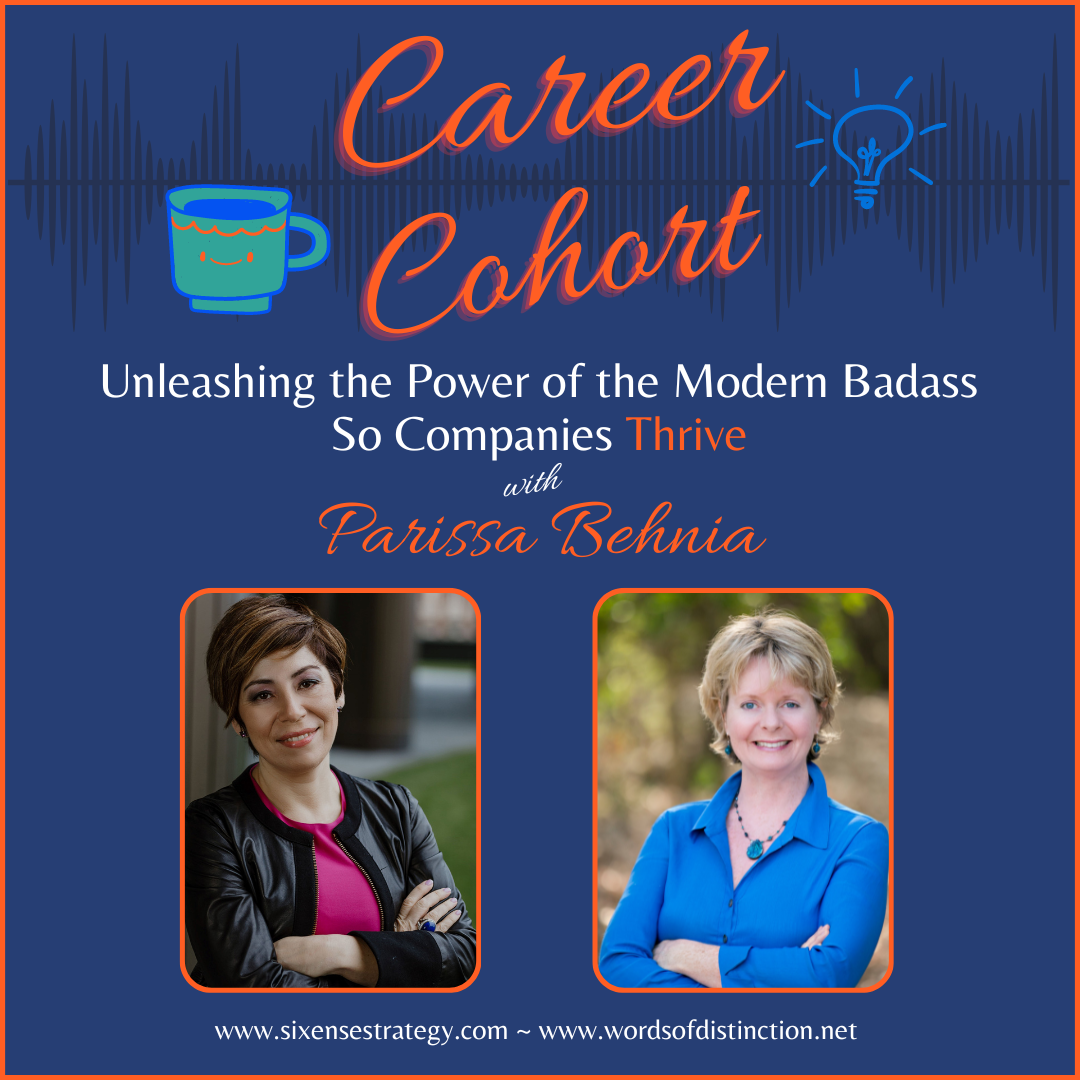
Unleashing the Power of the Modern Badass so Companies Thrive
/
RSS Feed
Share
Link
Embed
Have you ever felt like those who work with you don’t support you, even though you’re trying to achieve amazing results? Do they tell you you’re difficult to work with, or that you’re too much? Do you feel like they just don’t understand your intentions?
My guest, Parissa Behnia, coaches C-Suite and Senior leaders who are—what she calls—high-will, high-skill badasses. These leaders offer tremendous value to their company, but their edges may start to erode their relationships because their colleagues feel overwhelmed.
Parissa says badasses are like well-meaning bulls in China shops. They don’t mean to break as many dishes as they do, although let’s be honest, a lot of those dishes were ugly anyway.
Modern Badasses are often described as brilliant jerks (or worse). They’re told that they’re too brash, too much, or too colorful.
Live examples of Modern Badasses are Steve Jobs, Gloria Steinem, Thomas Edison, and Malala Yousafzai. You don’t have to like them personally to recognize the impact they’ve had on society. But Parissa is concerned about the ones we’ll never know because they’ve been sidelined, or they didn’t know how to get out of their own way. What technology or gifts to society do we not benefit from because we’ll never meet them?
How can we help Modern Badasses? What lenses have to be changed so they can be seen as important leaders instead of nuisances?
In our conversation, Parissa shares great advice—not only for badasses themselves—but for the people who interact with them every day. People who may be put off by the badass’s need for speed. Parissa knows that these badasses usually have a lot to offer, and if the rest of us can learn to harness that energy, we might find we’re in for an exciting ride.
Parissa is the author of Modern Badass: Tales from the Leadership Front.
RESOURCES
You’ll find the resources we discussed—including the assessment to find out if you have Modern Badass traits and the Sixense Empathy Model—on Parissa’s website:
Loved this episode? Follow Career Cohort on Apple, Spotify, and other major platforms—or sign up to get monthly tips delivered right to your mailbox (I guarantee no spam!).
We’d so appreciate a review and/or a 5-star rating. We provide an ad-free experience, so your support helps us reach new listeners and attract rockstar career experts so you can stay current on the latest tips and trends.
Thanks for listening!
Connect with me:
For more tips and advice for your job search, I post regularly on LinkedIn (emilysfwong), Instagram (@YourResumeCoach), Facebook (@CareersEmily), and Twitter (@CareersEmily)
Listener Challenge: 1-Hour LinkedIn Spring Cleaning
/
RSS Feed
Share
Link
Embed
As a resident of Northern California, I’m grateful for the signs of renewal and glimpses of spring, after a whooole lotta rain.
Personally, I’m fine with the rain. We needed to fill our reservoirs, and I’m convinced the bursts of extra-vibrant colors are, in part, a result of all those atmospheric rivers.
Speaking of renewal, I’m excited to see the new roles some of my clients have landed recently.
And speaking of new roles, if you have one…
Have you refreshed your LinkedIn profile to reflect your new position?
If we’ve worked together on your LinkedIn profile, I’ve already done the heavy lifting. So a quick refresh should be easy.
Just remember that your profile is a dynamic site. It’s meant to evolve just as you and your career are. So be careful not to set it and forget it.
Below are steps you can take now to refresh each LinkedIn profile section, assuming you updated them before you landed your latest job.
The best part? Unlike house spring cleaning, you should be able to do this in under an hour. Tune in to hear what to prioritize, tips on best re-writing practices, and how much time is reasonable to allocate for each section. The idea is to avoid overthinking it and managing your time.
Loved this episode? Follow Career Cohort on Apple, Spotify, and other major platforms—or sign up to get monthly tips delivered right to your mailbox (I guarantee no spam!).
We’d so appreciate a review and/or a 5-star rating. We provide an ad-free experience, so your support helps us reach new listeners and attract rockstar career experts so you can stay current on the latest tips and trends.
Thanks for listening!
Connect with me:
For more tips and advice for your job search, I post regularly on LinkedIn (emilysfwong), Instagram (@YourResumeCoach), Facebook (@CareersEmily), and Twitter (@CareersEmily)
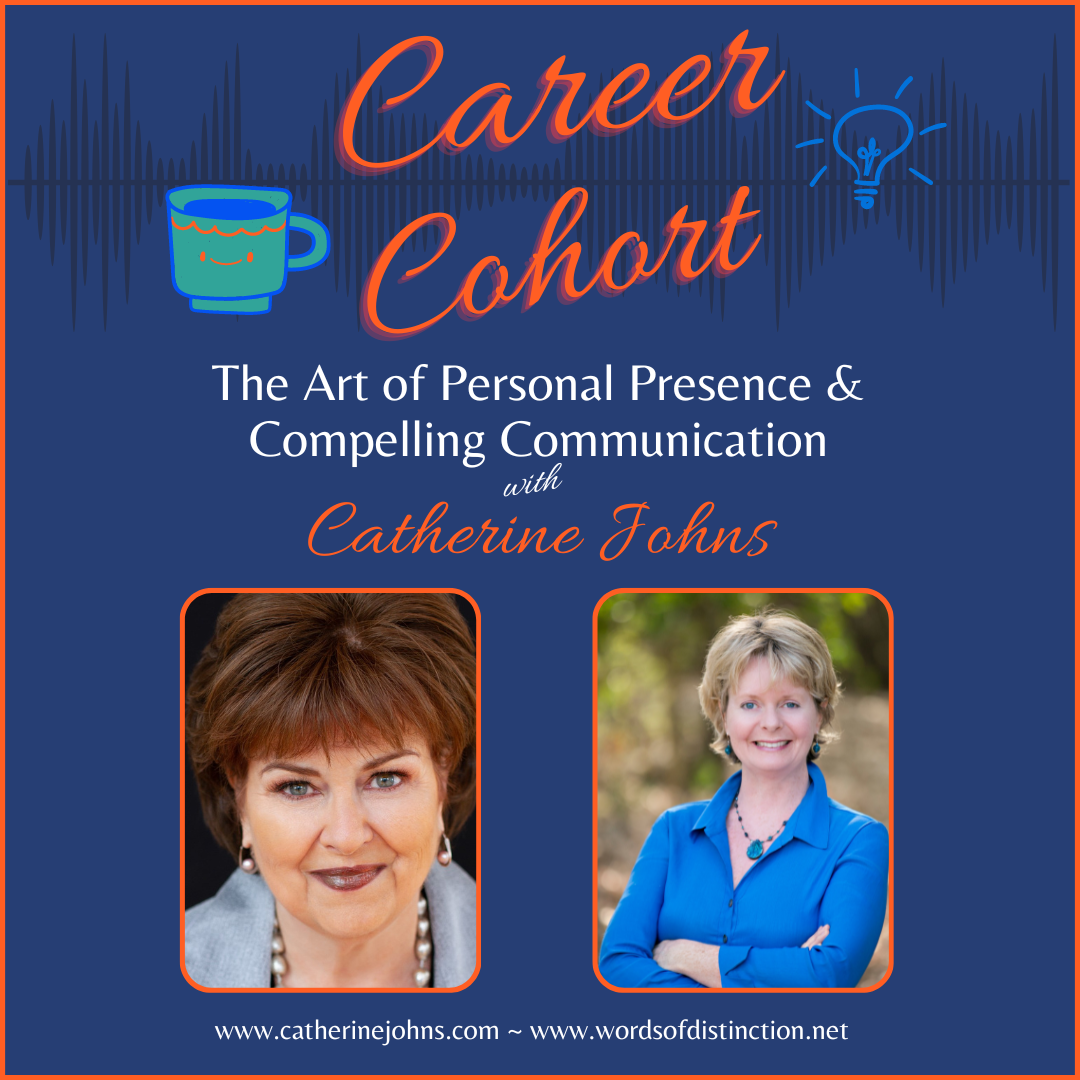
The Art of Personal Presence & Compelling Communication with Catherine Johns
/
RSS Feed
Share
Link
Embed
Where are your feet right now?
Seriously. Are both planted firmly on the floor or is one wrapped around the other to make yourself small?
Grounding yourself is just one of the surprisingly simple tactics Catherine Johns shares for supporting a more assertive posture.
In business, showing up means being seen, being heard, and making an impact. Catherine Johns reveals how to step into the spotlight with confidence and a strong presence, no matter the situation.
In this episode, you’ll learn how to:
Project a confident physical presence, with only a few tweaks, whether the meeting is on stage, in a conference room, or online.
Communicate and connect virtually through gesturing and eye contact.
Cultivate an authentic, relationship-based approach to public speaking.
Easily maneuver through unexpected audience feedback during public speaking sessions.
Alter your tone without resorting to upspeak.
Catherine is a communication ninja with a wealth of experience in radio, stage, and other public speaking environments. Her expertise lies in helping professionals enhance their personal presence and transform the way they communicate.
I’ve been following Catherine for a while because I can always count on actionable tips, often wrapped in a humorous story from her own experience.
Loved this episode? Follow Career Cohort on Apple, Spotify, and other major platforms—or sign up to get monthly tips delivered right to your mailbox (I guarantee no spam!).
We’d so appreciate a review and/or a 5-star rating. We provide an ad-free experience, so your support helps us reach new listeners and attract rockstar career experts so you can stay current on the latest tips and trends.
Thanks for listening!
Connect with me:
For more tips and advice for your job search, I post regularly on LinkedIn (emilysfwong), Instagram (@YourResumeCoach), Facebook (@CareersEmily), and Twitter (@CareersEmily)
The Difference Between Scope and Achievements on Your Resume
/
RSS Feed
Share
Link
Embed
One of the challenges I see job seekers facing when they send me their resume is distinguishing between scope and achievements.
But there is a difference.
Scope is the context within which you do your job. Think of it as the setting for you to razzle dazzle your audience with your amazing achievements.
Scope captures the breadth of your job and/or leadership. Examples might include the number of people on your team, the value of a portfolio you inherited, or the territory for which you’re accountable.
Scope is important to include because it demonstrates your ability to lead and manage initiatives.
But it’s those BIG, JUICY achievements that set you apart.
Example #1
Let’s use territory management as an example.
🌐 You’re talking about scope if you say you managed markets that included North America, Europe, and Asia.
🏆 BUT you’re talking about an achievement if you say you expanded that market by 80% in under two years.
Example #2
How about team leadership?
🌐 If you say you led a team of 150 high performers, you’re still talking about scope.
🏆 On the other hand, if you say you built a team of 150 high performers from scratch, that’s an achievement.
Example #3
Say you’re communicating what you do in sales.
🌐 If you simply say you managed a $60M portfolio, that’s scope.
🏆 However, if you say you grew your portfolio from $10M to $60M in one year…now that’s quite an achievement!
TIPS
🌐 Include scope in the paragraph under each job title.
🏆 Reserve your bullets for those BOLD and BODACIOUS impact stories.
By the way, if you’d like to get tips like this more frequently, I spend a lot of time on LinkedIn. Please do connect with me. You can find me here.
Loved this episode? Follow Career Cohort on Apple, Spotify, and other major platforms—or sign up to get monthly tips delivered right to your mailbox (I guarantee no spam!).
We’d so appreciate a review and/or a 5-star rating. We provide an ad-free experience, so your support helps us reach new listeners and attract rockstar career experts so you can stay current on the latest tips and trends.
Thanks for listening!
Connect with me:
For more tips and advice for your job search, I post regularly on LinkedIn (emilysfwong), Instagram (@YourResumeCoach), Facebook (@CareersEmily), and Twitter (@CareersEmily)
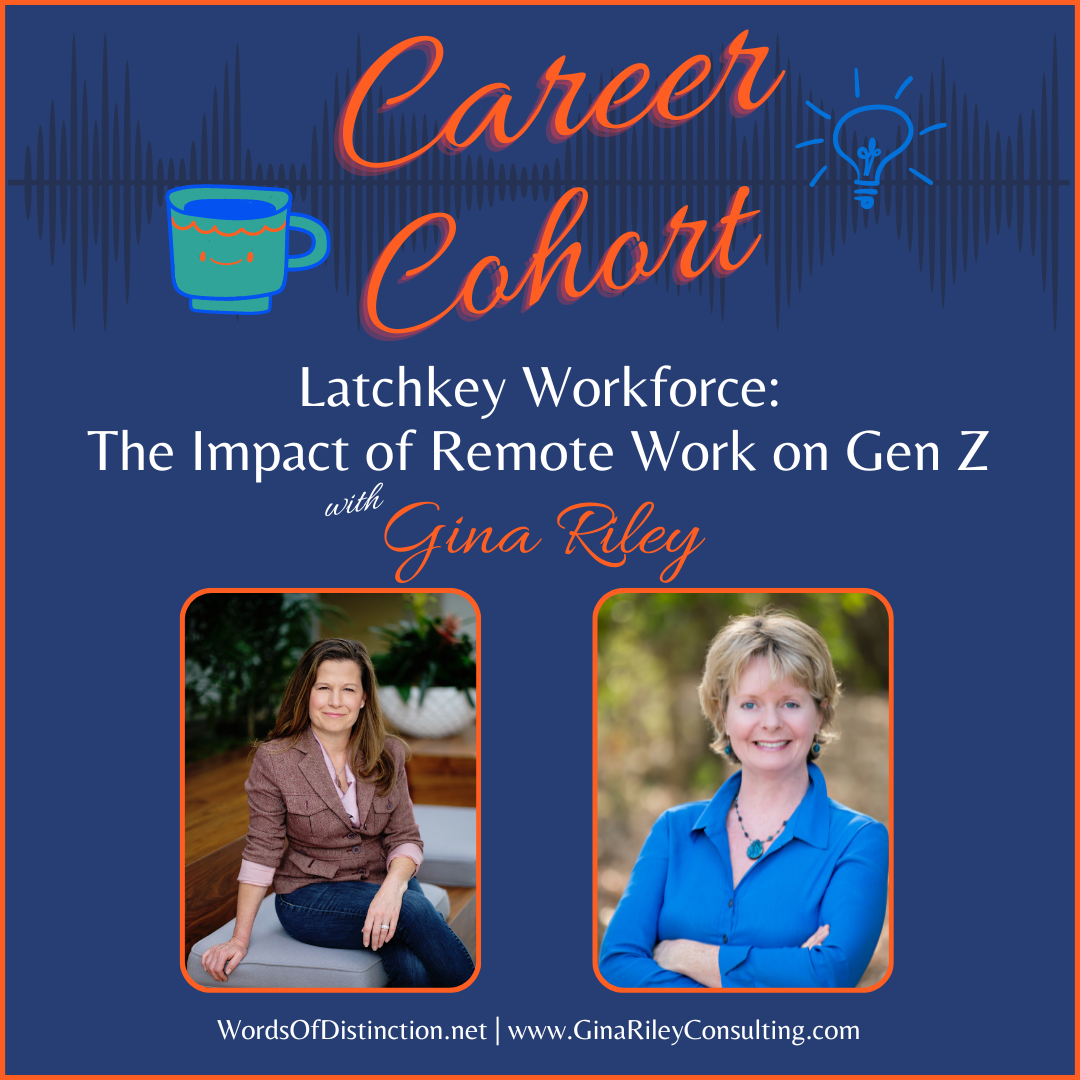
After watching Gina’s DisruptHR presentation on the impact of remote work on young professionals and learning that she has two sons in their early 20s—as I do—I knew we had to chat.
For many of us who’ve been in the workforce for a while, WFX has been the most logical option for navigating the unpredictable covid era.
And after three years—if you’re like me—you may have said “Hey, I’ve got all the technology I need, right here at home. I can save on gas and avoid the stress of a commute. How could anyone prefer to return to the office?”
But remote work isn’t necessarily ideal for everyone, including young professionals who could benefit from workplace socialization—just as the rest of us did.
The ability to read and respond to social cues is invaluable. Interpreting body language and facial expressions can impact the success of communication and collaboration efforts.
These subtle signals—picked up more easily IRL—help create a sense of understanding and connection, which in turn foster trust and strong working relationships.
Even conflict in the workplace provides opportunities for young professionals to grow, as they learn tools to navigate uncomfortable situations and conversations.
And how about the benefits of getting to know the full person behind those short (read: curt) DMs, or the rewards of building relationships beyond their direct line of reporting—which they might not get otherwise?
𝗦𝗼, 𝗵𝗼𝘄 𝗰𝗮𝗻 𝘄𝗲 𝗵𝗲𝗹𝗽 𝗚𝗲𝗻 𝗭𝗲𝗿𝘀 𝗹𝗮𝘂𝗻𝗰𝗵 𝘀𝘂𝗰𝗰𝗲𝘀𝘀𝗳𝘂𝗹𝗹𝘆?
🤝 Be open to hybrid arrangements; consider the benefits of on-site work, including the opportunity to learn from their most senior leaders.
🤝 Be intentional about mentorship and leadership development for Gen Zers in the workforce, so they’ll have the foundation for effective leadership and communication down the line.
🤝 Prioritize mental health and invest in HR leaders who can build strategies for inclusion, while staying mindful of the unique challenges faced by new professionals.
🤝 Encourage communication and connection through face-to-face interactions, rather than relying solely on texts and Slack.
As the debate over remote vs. in-person work continues, let’s consider the impact on young professionals and interns as they launch their careers.
And don’t forget the benefits of having Gen Z in the office. They bring fresh perspectives and ideas we can all learn from…if we listen.
Find the link to our conversation in the comments. 👇
Loved this episode? Follow Career Cohort on Apple, Spotify, and other major platforms—or sign up to get monthly tips delivered right to your mailbox (I guarantee no spam!).
We’d so appreciate a review and/or a 5-star rating. We provide an ad-free experience, so your support helps us reach new listeners and attract rockstar career experts so you can stay current on the latest tips and trends.
Thanks for listening!
Connect with me:
For more tips and advice for your job search, I post regularly on LinkedIn (emilysfwong), Instagram (@YourResumeCoach), Facebook (@CareersEmily), and Twitter (@CareersEmily)
How to Build (and Influence!) Standout Onboarding, Training & Development Programs
/
RSS Feed
Share
Link
Embed
👇👇👇
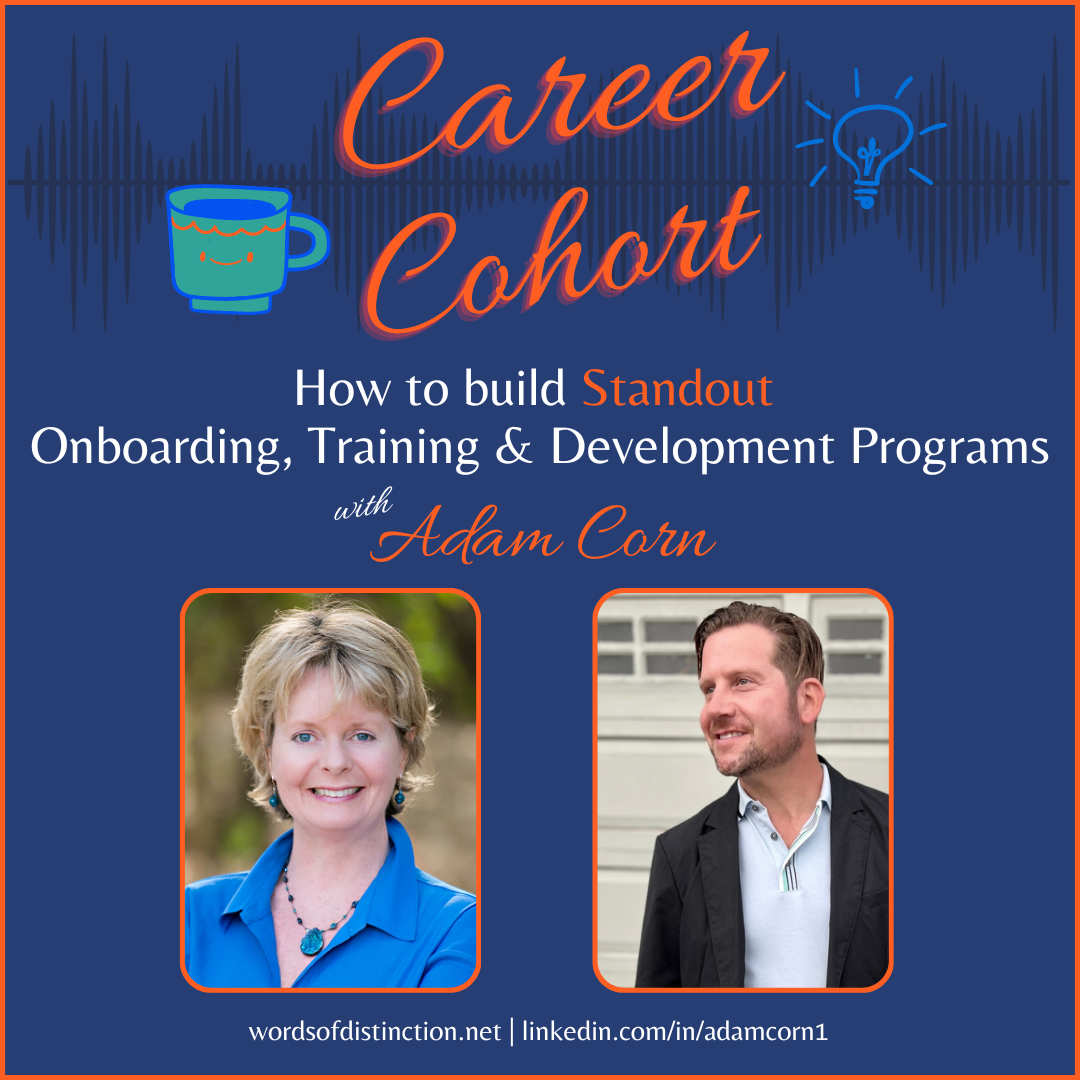
“If you have a lot of training and you have a culture within yourself of training and development, you’re going to be more successful in life and in your career, and you’re going to have more job security.”—Adam Corn
Adam Corn has been designing, developing, and implementing innovative training programs for government agencies and tech companies around the globe for 25 years.
𝗔𝗱𝗮𝗺’𝘀 𝗲𝗮𝗿𝗹𝘆 𝗟𝗲𝗮𝗿𝗻𝗶𝗻𝗴 & 𝗗𝗲𝘃𝗲𝗹𝗼𝗽𝗺𝗲𝗻𝘁 𝗲𝘅𝗽𝗲𝗿𝗶𝗲𝗻𝗰𝗲…
After serving as an Intelligence Officer, Adam completed his federal service as a professor at National Defense University at Fort McNair, where he designed and taught Master’s Degree-level courses focused on counterinsurgency and critical infrastructure protection.
𝗧𝗿𝗮𝗻𝘀𝗶𝘁𝗶𝗼𝗻𝗶𝗻𝗴 𝘁𝗼 𝘁𝗵𝗲 𝗽𝗿𝗶𝘃𝗮𝘁𝗲 𝘀𝗲𝗰𝘁𝗼𝗿…
In 2015, Adam transitioned to the private sector, where he has spent the past 7 years building cutting-edge global physical security and L&D programs for Google, Fitbit, Facebook/Meta, and GoFundMe.
Early on, Adam saw an opportunity to improve learning and development programs—which were typically canned, generic, and not focused on the company’s or their employees’ specific needs.
He knew this was a gap he could fill, and he now works to create engaging and effective learning & development programs using principles from TV commercials to keep them interesting and memorable. He believes everyone should have access to training that is fun, joyful, and effective.
A fierce employee advocate, Adam understands that investing in training and development is a surefire way to success in life and career.
𝗜𝗻 𝘁𝗵𝗶𝘀 𝗲𝗽𝗶𝘀𝗼𝗱𝗲, 𝗔𝗱𝗮𝗺 𝘁𝗮𝗹𝗸𝘀 𝗮𝗯𝗼𝘂𝘁:
💡 How to influence learning & development programs—even if they’re outside of your assigned business unit. 💡 How to create engaging and effective training experiences for your teams. 💡 How to use humor and psychological tricks to engage learners in training experiences.
Loved this episode? Follow Career Cohort on Apple, Spotify, and other major platforms—or sign up to get monthly tips delivered right to your mailbox (I guarantee no spam!).
We’d so appreciate a review and/or a 5-star rating. We provide an ad-free experience, so your support helps us reach new listeners and attract rockstar career experts so you can stay current on the latest tips and trends.
Thanks for listening!
Connect with me:
For more tips and advice for your job search, I post regularly on LinkedIn (emilysfwong), Instagram (@YourResumeCoach), Facebook (@CareersEmily), and Twitter (@CareersEmily)
Servant Authorship: How to Write Authentically in an AI World
/
RSS Feed
Share
Link
Embed
If you want to be an effective writer, get out of your own head and deliver what your reader needs. Sounds simple, but most of us 🙋♀️ are guilty of focusing too much on ourselves when we write.
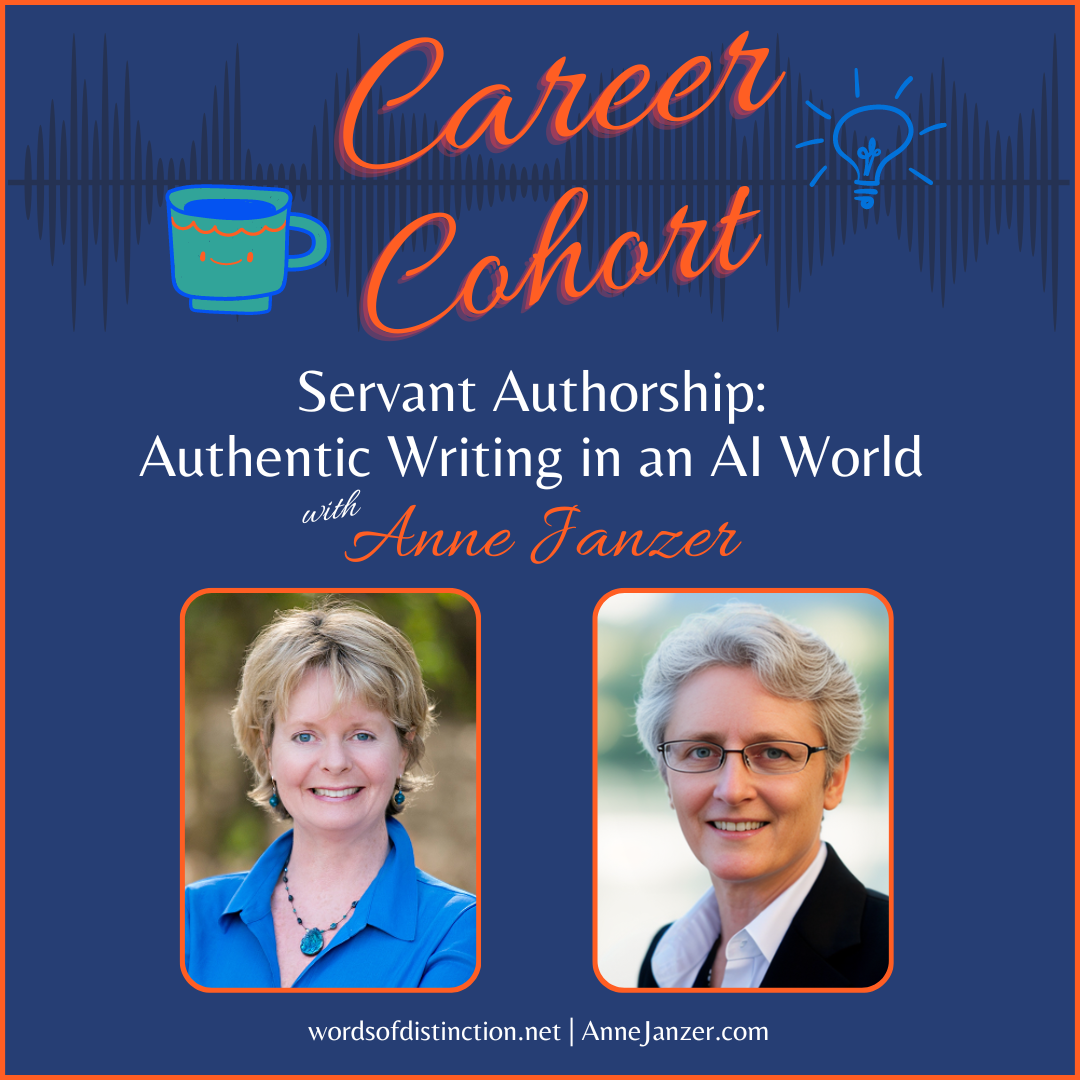
So Anne Janzer recommends that we adopt a mindset of what she calls “servant authorship.”
In this week’s episode of Career Cohort, Anne outlines the importance of the servant leadership approach as the foundation for connecting with our readers. Tune in to hear:
✍🏻 How to engage readers—including those who are reading our resumes, cover letters, and LinkedIn profiles.
✍🏻 Tips to make our communication more concise, effective, and respectful.
✍🏻 Advice on using ChatGPT and other AI tools without sacrificing authenticity (hint: ChatGPT can be a great prompt—but don’t rely on it for your final product).
Anne is the author of “The Workplace Writer’s Process” and “33 Ways Not to Screw Up Your Business Emails,” among other excellent books on improving writing skills.
If you’re a word nerd like me, Anne is a great conversation partner when it comes to the science of writing as a means of making connections with our readers.
In addition to being an author, she’s a nonfiction book coach and blogger—with a helpful newsletter that includes only content that the reader truly cares about. ☺️
Loved this episode? Follow Career Cohort on Apple, Spotify, and other major platforms—or sign up to get monthly tips delivered right to your mailbox (I guarantee no spam!).
We’d so appreciate a review and/or a 5-star rating. We provide an ad-free experience, so your support helps us reach new listeners and attract rockstar career experts so you can stay current on the latest tips and trends.
Thanks for listening!
Connect with me:
For more tips and advice for your job search, I post regularly on LinkedIn (emilysfwong), Instagram (@YourResumeCoach), Facebook (@CareersEmily), and Twitter (@CareersEmily)
Advice from a Gen Zer: How to Land & Thrive in College Internships
/
RSS Feed
Share
Link
Embed
“Be willing to put yourself out there and be willing to take some criticism. Take risks and make your own luck by being strategic, explicating your goals, asking questions, and pushing yourself beyond your scope of work.” – Zach Wong
When @ZachWong, a UCLA mechanical engineering student, confronted his fear of rejection and embraced opportunities to take calculated risks, he not only landed a rewarding internship—those experiences set him up for future success.
Now graduated and applying his skills full-time at a leading space technology company, he shares his hard-won knowledge on how to prepare for college internships, the importance of developing relationships with professors and leaders within the organization, and how to demonstrate leadership and soft skills during interviews—even when your experience is limited.
Zach is forthcoming about the challenges he faced—including those that were self-imposed—during his early internship preparation and experience. But with guidance from mentors and his determination to make his own luck, Zach learned what was necessary to not only land—but THRIVE in an internship.
He stresses the importance of starting your research on career opportunities early, developing relationships with professors, and having stories ready to tell during interviews.
In this episode, you’ll learn:
👉 How to prepare for and overcome your fear of rejection during the application process 👉 Strategies for developing technical and non-technical competency stories for interviews 👉 Tips for making an impact and standing out as an intern
For more tips and advice for your job search, I post regularly on LinkedIn (emilysfwong), Instagram (@YourResumeCoach), Facebook (@CareersEmily), and Twitter (@CareersEmily)
Loved this episode? We’d so appreciate a review and/or a 5-star rating. We provide an ad-free experience, so your support helps us reach new listeners and attract rockstar career experts so you can stay current on the latest tips and trends.
Loved this episode? Follow Career Cohort on Apple, Spotify, and other major platforms—or sign up to get monthly tips delivered right to your mailbox (I guarantee no spam!).
How to Influence Change and Earn Recognition Without a Formal Title
/
RSS Feed
Share
Link
Embed
If you can get people to set aside their agenda to help you, you’re pretty darned amazing—and you’re a leader.
In this episode, you’ll learn:
How some of my clients demonstrated leadership and got promotions to leadership roles despite not having a formal title
How you can demonstrate leadership without a formal title
Strategies to rally teams beyond your direct reports to help you achieve your goals
BY THE WAY…
5 Steps to Get Moving and Land a Fabulous Job
If you’re struggling to get started or gain traction on your job search, I offer a free, downloadable guide that can help!
The guide is for you if you’re struggling to get started or gain traction on your job search, and I have to tell you, I’ve already gotten a great response from a number of job seekers.
The guide is called: 5 Steps to Get Moving and Land a Fabulous Job, and it’s definitely for you if you’re struggling to actually get started on your job search and then manage your time around your search.
When you download the guide, you’ll also get—over a few days—4-5 emails with follow-up tips, tricks, and challenges to help spur you forward in your search. And you’ll even get access to my resume samples.
So if you need a little extra fuel to help you get moving toward that fabulous job, head on over to launchyourjobsearch.com and download the 5 steps.
Connect with me:
For more tips and advice for your job search, I post regularly on LinkedIn (emilysfwong), Instagram (@YourResumeCoach), Facebook (@CareersEmily), and Twitter (@CareersEmily)
Loved this episode? We’d so appreciate a review and/or a 5-star rating. We provide an ad-free experience, so your support helps us reach new listeners and attract rockstar career experts so you can stay current on the latest tips and trends.
Loved this episode? Follow Career Cohort on Apple, Spotify, and other major platforms—or sign up to get monthly tips delivered right to your mailbox (I guarantee no spam!).