Blog

Why You Should Keep a Career Journal

Why You Should Keep a Career Journal

Any idea what the #1 challenge my clients face when preparing to update their resume?

If you guessed that they can’t remember what they accomplished, you’re correct.

Consider the following comments from your fellow job seekers:

I’d forgotten I’d done that! I actually achieved more than I realized!

How about this:

Yes, I do all that, but I didn’t think it was anything special.

That’s because when we become an expert at something, the skill becomes second nature. And we start telling ourselves that anyone can do it. We’re so close to the skill, we don’t realize how amazing it is.

Sound familiar?

Make it easy on yourself by tracking results and collecting feedback in the moment, so you won’t have to scramble if you unexpectedly need a new job. Carving out just 15 a week (on Friday?) for this exercise should be manageable.

If you’re like me, this is the only way you’ll remember every achievement.

Following are 5 (easy, I promise!) steps for capturing your awesomeness:

1: Start with a brain dump

At this point, don’t worry about crafting the perfect bullets, and don’t stress over the details. Simply start by listing your ideas without a filter.

Get those fingers moving on the keyboard or pen on your journal. Good is better than nothing.

Even if you just start by writing down words, you can go back to them later and build on what you have.

If you find that you’re just not feeling the flow, go do something else for a while and return to it later.

Sometimes you just need to let things percolate in the back of your mind.

If you’re a fellow crossword puzzler, you know what I mean ;).

2: Track your measurable achievements

Tracking and storing your MEASURABLE achievements prepares you to act quickly when a job opportunity arises.

But again—don’t get hung up on the numbers if you don’t have them on hand. Use a space saver like “xx” and fill the numbers in later.

3: Include context when appropriate

As we’ve learned over the last few years, the only thing that’s certain is uncertainty. Be sure to leverage that by showing the recruiter how you’ve successfully led your team through a challenging situation.

Nothing tells the hiring manager that you can help guide a company through both good times and bad like telling a story within the context of an industry slump, an import shortage, or even an environmental crisis.

I know an operations leader who gained hero status within his company (and beyond) because he found a path to getting supplies to a disaster site in record time.

Yes, if you made a quick training or IT pivot during Covid, that still counts.

Don’t just add “Change Management” to your list of skills. Share how you successfully led your organization through an acquisition, or had already built an agile team that was prepared to ride out the wave and deliver results during an economic downturn.

4: Don’t forget to include challenges and mistakes

A journal isn’t just for recording your wins. It also helps you track your learnings AND course corrections when things don’t go quite the way you intended.

Inevitably, you’ll be asked about a mistake you’ve made and how you dealt with it, so be ready.

5: Look ahead

If you really want to turn this into a new year’s resolution, try writing your 2026 performance review now.

Think about 3 to 5 things you’d like to say you’ve accomplished by the end of 2026.

Need inspiration? Scan your company (and others) for opportunities:

Make it a point to stay aware of internal openings. These are the easiest transitions to make when you need a career refresh. And they’re great opportunities for gaining new experience.

Consider stretch goals that are realistic but will advance your career.

Offer to step up when you notice your boss or colleagues could use some help on a major project outside your comfort zone.

Do a LinkedIn search for 3 job postings that are similar to what you currently do. Look for gaps between your resume and the job requirements and seek out opportunities in your current role or higher ed to close them. Who knows…you may even find you’re a great fit for one of those jobs.😀

Let’s go!

Your journal can be as fancy as a colorful planner with lots of inspiring quotes, or as simple as a google doc. Keeping a master resume with all of your achievements is also a great way to keep track.

Whatever you use, the goal is to be prepared when a recruiter calls you out of the blue.

Checking in with yourself on a regular basis is key.

BONUS: I guarantee you’ll get a boost in your self-esteem when you realize all you’ve achieved.

Remember, luck is the intersection of preparation and opportunity (thanks, Seneca!).

I wish you a joyful and fulfilling 2026!

Copyright © 2026 Words of Distinction, All rights reserved.

You’re Not a Commodity

You’re Not a Commodity

Over the summer, I learned to sail on my sister Alice’s 38’ sailboat, True Blue III.

This was especially meaningful because it was Blue that safely carried Alice and her 2 crew during their 14-month global circumnavigation (8.5 months at sea), which began (2012) and ended (2014) in Hawaii. This, after a “test” run from British Columbia to Hawaii in 2011.

Of course, there are others who’ve sailed around the world. But there are some things that stand out about Alice and her crew:

She and her crew were all 50+ year-old women.

She completed the circumnavigation because she built her strong team around their complementary skills.

She was an expert on boat mechanics and maintenance (when was the last time you heard about that skill in the context of glamorous sailing stories?)

I already knew Alice was highly skilled at boat handling. But, being in her environment at sea, I was also reminded that she’s a patient yet no-nonsense leader, with the crew’s safety as her highest priority.

The rest of us don’t have to take such extraordinary measures to set ourselves apart. I’m using Alice as an example to show you that—even in the sailing world—people have skills that distinguish them from each other. (And yes…I’m also sharing because I’m deeply proud of her 😁.)

Now, let’s get busy…

📃 AI isn’t the tool for raising your profile.

If something seems too good to be true, it usually is.

I worry that Gen Z especially is risking commoditization due to their reliance on ChatGPT and similar apps to write their resumes.

AI makes a great assistant and copyeditor. But it shouldn’t be promoted to a leadership role when it comes to telling your unique story.

Two years ago, I tested ChatGPT for resume writing. It didn’t impress me then, and it still doesn’t.

💡 Pro tip: I’m not anti-AI, but please use it for specific purposes—such as suggestions for rewriting a line in your resume that’s stumping you, or highlighting the most important skills for a job posting. Be careful, though. I tested it recently to see which of a candidate’s experience matched a job posting’s requirements, and it gave the candidate credit for having skills that weren’t even on their resume.

🎨 Strategic use of style features makes reading easier.

Speaking of AI…

When I get Canva AI-designed resumes from job seekers, my first impression is typically, This is fancy, but where’s the substance?

You don’t need an app to create visual interest. Spiff up your Word-based resume by shading your section headings and bolding your role and company name. You can use a table to break out content sections. All of these Word features are applicant tracking system (ATS)-friendly—I promise.

You don’t need to go overboard. Just remember your purpose: To make your resume easier to skim than the competition’s.

⚠️There’s continued debate about whether a typical ATS can read a Canva-created resume, so be careful.

💡 Pro tip: Compelling content is the most important part of your resume. Gather and organize your achievements before you make major formatting changes, such as inserting a table. You want the format to serve your content…not the other way around.

🌟 A title that pops is the hook that captures the reader.

The top of your resume is the first place you get to grab the attention of your reader. Yet, often I see resumes that start with the headline “Executive Summary.”

Your reader will understand that the intro section is your career or executive summary—you don’t have to tell them. Instead, start with your title.

Your title could be as detailed as Award-winning Biotechnology People Leader or Corporate Sustainability Expert & In-Demand Keynote Speaker.

Or it could be as simple as VP of Global Operations or General Counsel.

The point is to communicate who you are and the job you want right at the start.

💡 Pro tip: If your current title is VP of Sales & Marketing, and that’s the role you’re applying for, by all means use that. But if your highest role is Director of Sales & Marketing and you want to avoid being confined to that level, use something like Sales & Marketing Leader.

🦄 There’s always something that sets you apart.

If you keep a record of your achievements, I guarantee that eventually you’ll uncover a common thread that distinguishes you. You may be a sales leader who’s unusually skilled at leading marketing or operations teams. Or an engineer who loves public speaking and knows how to break down technical ideas for the rest of us.

Uncover what your superpower is, and include that in your resume intro, your LinkedIn About section, and your interviews.

💡 Pro tip: if you have a side passion, include a line about that at the bottom of your resume. If there’s no room on your resume, be sure to include it in your LinkedIn About section. It’s amazing how often I’ve heard my clients say they’ve connected with their interviewers due to a shared interest.

🔎 Specifics give you an edge over vague adjectives and lists of responsibilities.

Someone recently asked me what the most overused descriptive word is that I see on resumes. The word driven immediately came to mind. Besides being common, it’s one of those words that doesn’t really convey to the recruiter anything about your skill set. Besides, if you’re a leader, you’re expected to be driven.

Instead of saying you’re driven, prove it by including hard data. For most roles, the recruiters expect to see results. The numbers don’t have to be financial; they could be percentages related to operational improvements or simple efficiency.

Another way to de-commoditize yourself is to replace words like responsible for with action verbs.

Using action verbs gives you more ownership, AND takes up less space.

Here’s an example:

Rather than:

Responsible for building…

Try:

Built…

If you kick off your bullet with a verb like Spearheaded, Improved, or simply Led, you’ll get to the point a lot quicker.

💡 Pro tip: Make it easy on yourself by tracking results and collecting feedback now, so you won’t have to rush if you find yourself in a position where you need a new job.

🌟 LinkedIn recommendations increase social credibility.

I know our focus is resumes here, but nothing reinforces what’s on your resume like what others have to say about you—and LinkedIn is the perfect place to showcase testimonials about your work. Tap into your network to ask for recommendations.

Cast a wide net; ask for 10 if you want 3. Nothing personal if some of your connections don’t respond. People are busy.

I coach clients to get recommendations from a 360 POV, such as direct reports, collaborators from different parts of the organization, and their own leaders.

Nothing says “servant leader” like a glowing review from one of your past employees.

💡 Pro tip: If you have space, you can include a testimonial (from LinkedIn or another source) in the body of your resume. Just not at the expense of your actual achievements.

Copyright © 2025 Words of Distinction, All rights reserved.

Keeping the Rhythm: Why Parallel Structure Matters

Keeping the Rhythm: Why Parallel Structure Matters

I recently learned to row. After a few lessons in a single scull, I had the opportunity to row in an 8-person boat.

There’s nothing more humbling than joining an experienced crew and trying to match my movements with theirs. When we rowed in unison, we were stable, smooth, and efficient. But if one of us was out of sync (🙋🏼‍♀️), the rhythm was disrupted, the boat slowed down, and we all wobbled.

The last thing I wanted was to be that person in the boat who messed up the flow. Let’s just say my fellow rowers were kind.

Just as rowers have to synchronize their strokes to get that elegant sweep of blades, resume writers follow one grammatical pattern when creating a list—whether within a sentence or bulleted list. It’s how we ensure rhythm, balance, and clarity.

Most importantly, it helps our reader keep track of our achievements.

How to Ensure Parallel Bullets

An example of where that parallel structure can get disrupted is in the branding section at the top of your resume.

Take a look at the following bullets from a technical sales leader’s resume and see if you notice what’s “off.”

  • Accomplished mid-market and small business pre-sales leader
  • In-demand keynote speaker and technical sales expert
  • Recognized for transforming and mobilizing technical teams

Yep. The last bullet just doesn’t belong, since it starts with a verb rather than a noun phrase.

💡 Let’s try this, instead:

  • Accomplished mid-market and small business pre-sales leader
  • In-demand keynote speaker and technical sales expert
  • Builder of high-performing teams

Why We Care

Can the non-parallel bullet be understood just as easily as my corrected version?

Arguably, yes.

But a parallel structure leads to uniformity throughout the section, which in turn results in clarity and a smooth read. And a smooth read makes for a happy reader…🤗

By the way, there are other ways to call out your accomplishments in the branding section; you can talk about specific achievements rather than your broader contributions, as I did in the example above.

But again…either start with a strong verb (Steered the organization through multiple changes) or a noun (Winner of 10 industry awards). Just be sure to stick with one grammatical form.

How to Ensure Parallel Structure Within a Sentence

Don’t forget to follow this rule within a sentence.

Here’s an example where I see clients struggle:

❌ Incorrect: Increased revenue, profits, and scaled for growth.

If you start a series with one verb, don’t introduce a new verb unless…

You use a new verb for every series item, as in:

👌 Grew revenue, increased profits, and scaled for growth.

Or…

The new verb is part of a new clause:

👌 Increased revenue and profits while scaling for growth.

If you call out your superior communication skills in your resume, cover letter, or LinkedIn profile, you never want to create doubt in the mind of your reader—who may well be one of those scary grammarians 😱. Don’t get caught with this common mistake.

Even if they aren’t sure what the exact error is, the hiring manager may feel it if something’s off.

They’re also less likely to be as forgiving as my teammates.

Soaking-wet me after passing my boat re-entry test!

Copyright © 2025 Words of Distinction, All rights reserved.

Cut the Clutter: Scan for Unhelpful Jargon

Cut the Clutter: Scan for Unhelpful Jargon

Word clutter hides a clear focus.—Roy Peter Clark, How to Write Short


Today let’s focus on something close to my heart: cutting the clutter (aka jargon) from your sentences.

⚠️Yes, keywords matter, but beware.

It’s easy to get so caught up in trying to beat the ATS (applicant tracking system) or boost SEO (search engine optimization) that we lose sight of our message.

Keyword packing without strategic context won’t add the strength you need for a powerful profile. At best, that tactic will slow down the reader. At worst, it’ll cause some eye rolls on the other side.

Bottom line: Don’t confuse buzzwords with words that actually do bolster a phrase.

Here’s an example: 

Original sentence:

Skilled strategist maximizing workable solutions and performance for key marketing goals. 

(Wait…what?? As in, what does this person actually do, what do they deliver, and what are the results?)

Revised sentence:

Marketing strategist who introduces sustainable solutions that lead to multimillion-dollar results.

See how, by replacing a word salad with meaty specifics, the sentence is stronger?

💪 Try this exercise:

Print out a copy of your resume and ask a friend or relative (preferably one with a strong BS meter) to review it and highlight confusing or vague statements.

💡 HINT: Don’t ask them to edit. Ask them to just identify anything that doesn’t make sense with a quick read. Nothing works better than a fresh pair of eyes to catch statements that bog down your resume.

Once you have that highlighted document, play with the words, rearrange them, and see what you can cut. Hands down, the #1 reason resumes are a drag to read is that they’re bloated with unnecessary words.

🛎️…Or ask a professional for help.

My main service is re-writing resumes and LinkedIn profiles, but did you know that I’m also available to provide 1:1 guidance and feedback on your resume, LinkedIn profile, and other career documents?

Not everyone needs a complete resume or LinkedIn overhaul—if you have questions about your strategy, content, or layout, I’m here for you.

After our meeting, I’ll send you a recording as a reference. Schedule here for a 1:1 resume or LinkedIn review.

Copyright © 2024 Words of Distinction, All rights reserved.

Make Space for What Matters

Make Space for What Matters

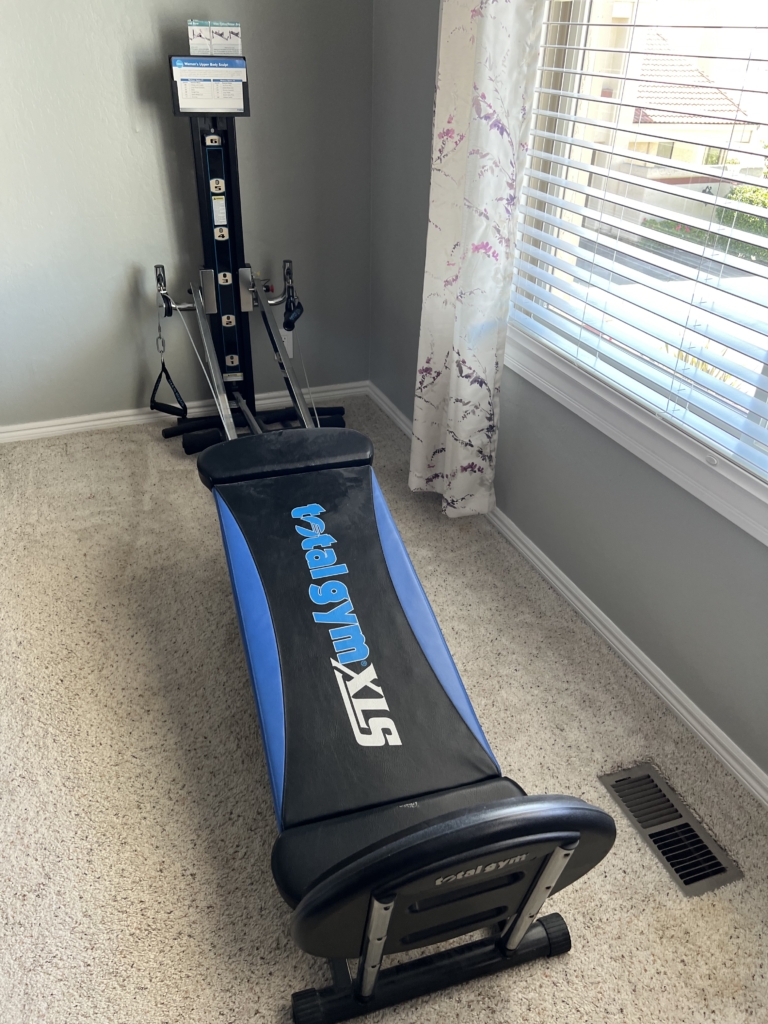
We have this massive machine in our spare room. At one time, someone in our family thought it was a good idea.

Now it’s not. It’s just taking up space.

Time to sell it.

🧹🗃️ Out with the old…

Speaking of clearing out stuff that’s no longer useful, now’s a great time to make space for relevant Information.

It’s been fun celebrating the new roles many of you have landed recently.

But whether you earned a new role in the last 2 weeks or the last 4 years, how about taking 15-30 minutes to clear out dated details—even if you’re not actively looking?

Spring is a great time to scan your career profile to identify details that no longer serve you or your target companies. 🍃

There are exceptions to every rule, but generally speaking you shouldn’t need to include information beyond 15 years. So if you’re about to add achievements for the last 5 years, think about what you can remove from your earlier career.

Especially if you’re working in high tech or marketing—where so much has changed—take special care to replace technical skills and terms that no longer apply to you or your field.

Continue reading “Make Space for What Matters”
Think Like an Employer: Using Job Postings to Focus Your Resume

Think Like an Employer: Using Job Postings to Focus Your Resume

I just got great feedback from a client regarding my process; she thought a tactic we used was helpful to landing her new job. 🎉

To be honest, the tactic is so simple that I’d taken it for granted.

I’m referring to the practice of using 1-3 job postings to help you focus and tailor your resume to your target role.

The key to writing a compelling resume is to begin with the end in mind: In what role do you see yourself in 6 months? How can you help the employer envision YOU in that role?

Job descriptions help you future-proof your resume—and learn to think like an employer.

So, how can you use and analyze job descriptions?    

🕵️‍♀️ Dig for themes

The first thing you’ll want to do is scan for themes.

Does the job description repeat the need for certain skills? If so, those qualifications are likely prioritized by the hiring manager.

What else is the company looking for in an ideal candidate? What problems are they hoping you’ll solve? What are some specific skills they list? What are the top 3–5 qualifications they’re looking for?

🏆 Gather your own examples of success

Once you understand what the company needs, gather examples of when you’ve demonstrated the required skills.

Don’t worry about grammar or crafting the bullets perfectly at this point.

Just get it down on your laptop, your journal…whatever works.

🎯 Align and get specific

Once you’ve had a chance to brain dump, THEN start polishing…

Craft your specific mini stories and achievements that align with the company’s language. What adjectives or descriptors stand out?

Be careful with adjectives: It’s not just a matter of word-packing your resume.

For example, if the company is looking for someone with great communication skills, don’t just say you have great communication skills.

Include specific examples of how you used your communication skills under the job titles to which they apply, and if communication is a top skill they’re looking for in a candidate, include how you’re a great communicator in your branding statement at the top.

For example, are you really good at distilling complex technology to non-technical audiences in meetings and at trade shows?

🌟 Differentiate yourself

Think about how you can tell these stories in a way that differentiates you.

Instead of simply calling out your strategic leadership…are you the kind of person who isn’t afraid of risk? Do you think it’s important to tell the CEO the truth, even if it might sting a little—as long as it’s in the spirit of advancing the company toward its goals?

If you have experience with cloud architecture, talk about how you led a large team in migrating a legacy system to the cloud in record time.

How about leveraging your existing network to expand the market and drive revenue growth? The possibility that you’ll bring existing partners to your new employer can be a huge asset.

One more thing…

If you had to achieve something in a less-than-ideal economic or competitive landscape, such as driving revenue growth or gaining new customers in a down market; converting what was supposed to be a live conference to a virtual one in record time (remember 2020?); or changing the strategic direction after overcoming resistance, all the better.

🎁 Job description bonus

When you’re forced to sit down and think about your achievements, they start to bubble up to the surface, and you’re reminded of all the great things you’ve accomplished. Way to go!! Celebrate!! 🎉

Copyright © 2024 Words of Distinction, All rights reserved.
10 Tips to Modernize Your Resume…fast

10 Tips to Modernize Your Resume…fast

When we modernize our house, we don’t always need to go out and buy new furniture or the latest smart home gadgets.

Sometimes a fresh coat of paint or donations of dated items will do. That’s what I spent last weekend doing, and I can’t tell you how refreshing it was!

These two simple changes can do wonders to brighten things up around the house.

The same goes for our resume.

Following are 10 tips to modernize your resume. Good news: you should be able to complete this in 15 minutes if you know your way around your resume software.          

✂️ #1: Cut back your margin

If you’re like me, you were taught early that you needed a one-inch margin around your page. But that’s not true when it comes to resumes. My recommendation? Change it to .6 or .7.

This will allow you to create more space between bullets and within the document.

Which leads me to…

🌬️ #2: Give your bullets breathing room

I usually set my spacing at 3 points between bullets (and single spacing between lines of the same bullet). The reader will appreciate this because your document will be easier to read.

🖋️ #3 Update your font

If you’re using Times New Roman as your default, it’s time for a refresh. Times New Roman has been around forever—and you can tell.

If you’re wondering which font to use instead, you can’t go wrong with Calibri. To add variety, you can use Cambria for headings (e.g., Professional Experience and Education).

Now, it’s not necessary to use more than one font—and definitely don’t use more than two. That’s a design no-no.

🌟 #4 Kick off your resume with a title that pops

Your title could be as fancy as Award-winning Biotechnology Sales Leader or Global Technical Sales Leader & Keynote Speaker.

Or it could be as simple as Director of Global Security or General Counsel.

The point is to communicate who you are and the job you want.

❌ #5 Remove irrelevant statements

Remove words and phrases like objective or references available upon request. Both are dated and take up valuable real estate.

Worse, an objective statement shouts me, me, me! Marketing is about addressing what the reader needs. Not what we want. Our resumes are marketing documents, so let’s treat them as such.    

Re: references, it’s a given that we’ll provide them if asked, so no need to mention them.

🔤 #6 Use font variety

Make it easy for the reader to distinguish between your job title, company name, dates of employment, and location.

I see a lot of resumes that have the title, company name, location, and date all scrunched together and in the same font style, making for a challenging read.

If your role’s the most important item—maybe you have an impressive career progression—and you want to showcase that, then bolding and all caps work great.

Your company name is the next priority. Maybe use bold (without all caps) to set it apart from location and dates while distinguishing it from the job title.

Your dates and location don’t need much attention, so visually separate them (off to the right is fine) and just stick with regular (un-bolded) font.

Sometimes the company name is more important than your role. You may want to draw more attention to the company names because you’ve worked for some top brands.

In this case, follow the same principle as I described for the prioritized job title, above.

🎨 #7 Use color and shading

Spiff up your resume by shading your section headings and then use that color for your name and title at the top. You could also use color for your job titles or company names.

📝 #8 List (if you must) older roles without dates

If you’ve been working for a while and you’re worried your resume might date you, here’s a tip: add a Prior Experience subsection, and then just list your roles and the names of your companies—sans dates.

Since this section is separate from the main Experience section, omitting dates won’t appear inconsistent.

I had a client who worked at Kraft early in her career and was looking for a role in CPG. Since Kraft is known as a leader in CPG, we wanted to keep Kraft on her resume, so we listed it under Prior Experience—with no dates.  

🔎 #9 Find and replace worthless words

If you know me, I’ve been saying this for years, but I still see it from time to time, so I’ll repeat it here:

Replace words like responsible for with action verbs and data points.

Action verbs give you more ownership, AND take up less space.

Here’s an example:

Rather than:

Responsible for launching…

Try:

Launched…

If you kick off your bullet with a verb like Oversaw or Spearheaded, you’ll get to the point a lot quicker than Responsible for...

Don’t forget to include data points (results) wherever possible to prove how fabulous you are.

Read my thoughts on other words we can cut here.

💻 #10 Update your email address

If you still have an AOL or even Yahoo address, consider opening a free Gmail account, even if you use it just for your job search.

Need examples and inspiration for your updates? Check out my samples.

Copyright © 2023 Words of Distinction, All rights reserved.

Lessons from a Financial Pro: Leave Nothing on the Table

Lessons from a Financial Pro: Leave Nothing on the Table

If you worry about leaving money on the table when negotiating job offers…or you’re feeling overwhelmed by all the different types of employer equity grants…or you aren’t sure which are the best options for YOU, then you’re not alone! 

Many job seekers struggle to navigate the complexities of equity compensation.

So I sat down with Richard Archer, President of Archer Investment Management to learn how to navigate this often-fraught piece of the negotiation process.

Richard shared relatable stories and practical strategies to secure the equity compensation you deserve.

The following is an excerpt from our conversation. I’ve edited for brevity.

💰 The basic types of equity

Emily: If we could start with a little primer about what types of equity might be included in an offer package…

Richard: Sure. Equity can be offered in a lot of different ways. You can have equity compensation, such as restricted stock, incentive stock options, or nonqualified stock options.

You can also get equity through employee stock purchase plans, which can be incredibly valuable. You also might have employer stock in your 401K. Maybe that’s how they do their match.

Or maybe you’re able to buy employer stock through your 401K. So there are different ways it can show up.

💰 The difference between private and public valuation

Emily: Let’s talk about the difference between private and public companies. I understand there are different options depending on the type of company, and there are benefits to each, correct?

Richard: In general, public companies tend to be larger than private companies.

So when you’re joining a private company, that stock might have a greater probability of a lottery win, if you will, of growing really quickly—as opposed to if you join Apple.

Apple’s stock does very well, but the chance of it tripling in size in the next 10 years is a lot lower than for a company that’s a startup that could get purchased in 3 years for $100M. And if you’ve got 1% of the stock, that’d be amazing.

So that’s one thing. The private stock tends to have more growth potential.

Another thing is that public companies have a market valuation. So when you look on Yahoo Finance or Morningstar, you can see that Apple shares are selling for X dollars right now.

On the other hand, a private company has an internal valuation provided by an internal auditor.

That internal valuation can sometimes be quite stale, especially now. So you have to be careful that the internal valuation they’re projecting for you in your offer is fair.

💰 The importance of asking for current information

Emily: Why would it be stale?

Richard: That’s a good question. Public markets are live. Everything’s valued every day.

But private companies typically submit 409A valuations on an annual basis. So you could have an internal valuation or a 409A valuation that’s 11 months old.

Well, anyone who’s looked at the market in the last 12 months knows that tech stocks have had a really hard time, and that old valuation could be 50% or 75% higher than the actual valuation right now.

We had a client who took an offer at a big tech company that was private.

She based her house purchase decision and acceptance of the job on the valuation provided by HR, which was based on old numbers and rosy projections. Where she thought she was going to have $8M in 5 years is now probably closer to about $1.5M.

She bought this fabulous house here in Texas and is now panicking a little bit because she bought more house than she probably should have, based on the valuation provided.

Keep in mind, this is a new client to us, so we weren’t a party to that decision.

💰 Understanding what we’d give up by leaving our current job

Emily: What are some questions candidates can ask on the front end so they can avoid these big mistakes later?

Richard: The first thing is to figure out what you currently get for compensation and what accolades you’ve had at your current job. That can help you negotiate a better job offer.

Have your history of raises, accomplishments, any teams that you’ve run, or new certifications you’ve earned at your current job. Look at your benefits package, like your 401k summary plan description.

Also include a listing of all current grants, like your restricted stock or stock options.

I had a client who negotiated as a salesperson for a tech company, was moving to a competitor, and had negotiated his entire offer. He had a nice salary coming in. He called me and asked whether there was anything he’d forgotten.

I said, Well, in the next 6 months, you’re going to vest $235,000 of restricted stock in your current company. Did you mention that to your new employer?

So he sent them an email. Within an hour, they gave him a vesting grant of $235,000 of stock in the new company. So with just a simple email, he earned a quarter of a million dollars.

💰 Considering best fit for our lifestyle (It’s not always obvious)

Emily: What are some other ways people can avoid leaving money on the table?

Richard: When you’re negotiating a new job, you want to think about the best type of compensation for you and your situation.

For someone who has a lot of risk tolerance and not a lot of need for cash right now, maybe they want to take more stock options, with the potential of greater earnings in the future. For others who’ve got a mortgage or college expenses, maybe cash is more important now.

We’ve got a client who’s young. He’s a phenomenal engineer, and he keeps getting hired away to new companies. The problem is, he’s too smart for his own good.

He’s amazing, but he gets bored easily.

He jumps to the next company and the next company, and we’ve actually talked with him about taking more cash upfront and less equity, because he’s not there long enough for it to vest.

It’s more valuable for him just to take cash, even though he has the risk tolerance to take the private stock. We just take cash with him and then invest it elsewhere because it just makes more sense for him.

💰 Wait! There’s more!

Listen to the full episode and get other great advice from Richard on:

  • Exercising stock options for maximum benefit, including tax considerations.
  • Managing the hurdles of sales restrictions and company stock-trading blackout periods.
  • Negotiating exit packages and severance benefits on the front end.

Photo credit: Hywards from Getty Images

Copyright © 2023 Words of Distinction, All rights reserved.

One-hour LinkedIn Spring Cleaning

One-hour LinkedIn Spring Cleaning

☝️ Results of our never-ending atmospheric rivers…

Last weekend, we celebrated Easter.

Whether we celebrate the holiday or not, many of us can appreciate the message of renewal.

As a resident of Northern California, I’m grateful for the signs of renewal and glimpses of spring, after a whooole lotta rain.

Personally, I’m fine with the rain. We needed to fill our reservoirs, and I’m convinced the bursts of extra-vibrant colors are, in part, a result of all those atmospheric rivers.

Speaking of renewal, I’m excited to see the new roles some of my clients have landed recently.

And speaking of new roles, if you have one…

Have you refreshed your LinkedIn profile to reflect your new position?

If we’ve worked together on your LinkedIn profile, I’ve already done the heavy lifting. So a quick refresh should be easy.

Just remember that your profile is a dynamic site. It’s meant to evolve just as you and your career are. So be careful not to set it and forget it.

Below are steps you can take now to refresh each LinkedIn profile section, assuming you updated them before you landed your latest job.

The best part? Unlike house spring cleaning, you should be able to do this in under an hour:

Headline (⏰ 5 minutes)

Are you now a VP rather than a director?

Did you expand the scope of your role, say from strictly sales to sales and marketing leadership?

Make sure your heading reflects what you’re doing in your current position, as opposed to what you did in your last job.

About (⏰ 15 minutes)

In this section, does it read as if your last role is still current?

If so, add a couple of sentences re: your current role, and change any references to your previous job to the past tense.

For your older roles, use words like “Previously…” or “Prior to leading global operations for…”

Make room for your current role by condensing any information from your earlier jobs.

If you list your top skills in this section, are they up to date?

Skills & Endorsement (⏰ 5 minutes)

Take a quick inventory: what skills are you applying in the new role? Are they listed in this section?

Experience Section (⏰ 15 minutes)

Be sure to add your new role in the Experience section.

Although you may not have had a chance to add measurable impact, you can include the scope of your role.

If you have made an impact, but you’re not ready to share publicly, that’s OK, too.

But at least keep an easy-access diary of your achievements so you won’t have to go searching for them later.

Recommendations (⏰ 10 minutes)

One of the best times to ask for recommendations? Right after you’ve left your previous job, while your fabulous contributions are still fresh in your colleagues’ minds!

Remember, it’s not just those you’ve worked for that you should ask. Endorsements from industry colleagues, clients, and peers from different business units also add credibility.

And nothing says leadership like a glowing recommendation from someone who considered you a mentor—even if they didn’t work directly for you.

Education, Courses, and Certifications (⏰ 5 minutes)

Have you gone through additional training at your new organization?

As part of onboarding, you may have benefitted from training for leadership or DEI. Go ahead and add that to your courses.

Education or certification that are in progress qualify, too. And will boost SEO.

Volunteering and Organizations (⏰ 5 minutes)

Check in on what you have listed in your Volunteering section.

Have you taken on new leadership roles? This is a great section for adding additional keywords—especially if the skills you use in your board or volunteer work is related to your profession.

So there you have it. Just one hour.

Just like spring, your profile should be growing and evolving.

Time passes. Seasons change. Keep your LinkedIn profile refreshed so you’re prepared for your next opportunity.

Happy spring! 🌸🌱

Copyright © 2023 Words of Distinction, All rights reserved.

ChatGPT: Should You Trust a Robot to Write Your Resume?

ChatGPT: Should You Trust a Robot to Write Your Resume?

I recently sat down with Anne Janzer. She’s the author of several books on effective writing and has a special interest in how people write for and in the workplace.

Anne also coined the term servant authorship, a play on servant leadership.

Servant authorship is the discipline of getting to the heart of what the reader actually needs and delivering on that expectation.

Sounds simple, right? Unfortunately, we tend to overlook our audience’s interests as we hustle to get our content out.

The need for more focus on servant authorship couldn’t apply more to resume writers and job seekers.

You’ve heard me say it over and over…

When we write resumes, cover letters, and LinkedIn profiles, it’s so important to share experience that’s relevant to what the hiring team is looking for in a candidate.

Servant Authorship in an AI World?

A key tenet of servant authorship is authenticity (no surprise the words spring from the same root). Naturally, my conversation with Anne turned toward AI and ChatGPT. Specifically, how they apply to resume writing.

In case this is the first you’ve heard of it, ChatGPT is the latest tool from OpenAI, and it’s getting a lot of…well…chatter.

So I conducted my own test to see what all the buzz was about.

Continue reading “ChatGPT: Should You Trust a Robot to Write Your Resume?”
Theme: Overlay by Kaira Extra Text
San Francisco, CA